The world's largest legal aid mandate cannot fulfil its promise without stronger pathways to justice.


Justice begins long before a courtroom. It begins with informed communities, responsive institutions, and people on the ground who can provide timely support.
Through TILT, MAP collaborates with legal service authorities, judges, lawyers, paralegal volunteers, law schools, and civil society organisations to strengthen public legal aid systems and improve access to justice.
Impact
Where we work
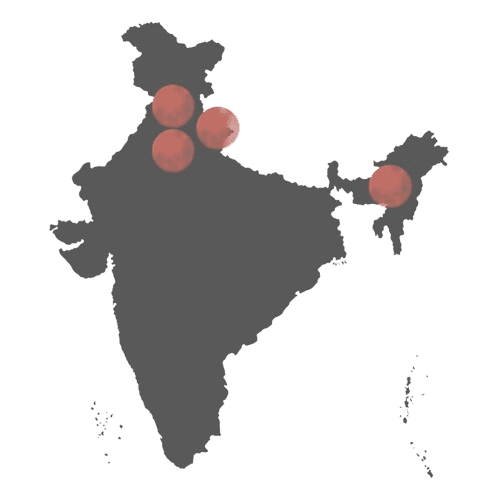
MAP has formal collaborations with state and district legal services institutions across 4 states in India: Delhi, Himachal Pradesh, Mizoram, and Uttarakhand, where it works closely with legal aid actors to strengthen their capacity to provide services effectively.
MAP also engages with law schools, state institutions and other justice stakeholders for its larger vision of democratising justice for communities at the margins.
To address the justice gaps at the grassroots, MAP is currently implementing a 'S.M.A.R.T.' approach focused on strengthening legal aid institutions through a 5-point action plan. This aims to build inclusive, safe, and tech-enabled systems that empower India’s legal aid architecture for meaningful last-mile justice delivery.
This includes:
S: Standardising specialised training for legal aid lawyers and paralegal volunteers to improve quality of legal services.
M: Creating mentorship and monitoring frameworks for justice first-responders to navigate challenges and improve impact.
A: Undertaking targeted outreach for community awareness and improved legal literacy.
R: Co-designing diversity-inclusive recruitment policies for improved representation across legal services institutions.
T: Developing tech tools like digital learning and sensitisation platforms to create a cadre of specialised duty-bearers for improved legal service delivery.

MAP routinely works in partnership with the District Legal Services Authorities to organise community-based Mega Camps, held in underserved settlements where multi-sectoral service providers offer their support to help people access critical government schemes, health facilities, documentation, and legal counselling, all in one space.
A unique feature of these camps is MAP's use of interactive games and activities. Through tools such as myth-busting darts and a customised snakes-and-ladders game, women are encouraged to engage with information on their rights, challenge harmful misconceptions, and build confidence in seeking support and accessing services.



Among the key challenges facing the legal aid system is the persistent gap in women's access to justice. While a majority of legal aid cases concern women and children, women constitute only around 35% of legal aid providers across the country. As both service seekers and service providers, women continue to face deeply gendered barriers that limit their participation in and access to the justice system.
We work to transform India’s Legal Services Institutions by addressing the systemic gender inequities embedded within the justice ecosystem.
Through research, institutional engagement, and capacity strengthening, MAP seeks to build a more equitable and inclusive legal aid system in which women legal aid providers can sustain their work, access decision-making spaces, and emerge as leaders within the broader justice ecosystem.
Women at the
Frontlines of
Justice
Women on the frontlines of legal aid face myriad challenges in the legal aid and justice ecosystem– from poor awareness and non-inclusive enrolments, to lack of recognition and leadership pathways. Their often-invisible commitment and tireless effort, however, remain at the heart of access to justice for millions of marginalised people across the country.
MAP spoke with some of these women, who, despite facing significant systemic barriers, demonstrate exceptional leadership and unwavering determination. Their bright sparks of leadership, often kindled under challenging circumstances, represent the true driving force behind sustainable change in our legal aid ecosystem.
Collaborations with Law Schools:
MAP works to strengthen engagement with law students through workshops, research and training modules, institutional collaborations, and digital learning initiatives such as JusticeBlox.
These interventions aim to expose students to legal empowerment, community-centred justice practice, and the realities of access to justice in India. By building practical exposure and increasing visibility of public-interest-focused careers, MAP seeks to encourage more young lawyers to engage meaningfully with the justice sector and influence the future of legal aid service delivery in India.

JusticeBlox
A national competition for the biggest, brightest, and boldest ideas to tackle India’s legal aid and access to justice challenges. JusticeBlox is where students move beyond moot courts and theory to build real solutions—block by block—for a justice system that actually works for people. Designed as a collaboration between NALSAR University of Law, Hyderabad and MAP, the competition invites young thinkers to imagine large-scale, systemic interventions that could one day be taken up by legal aid institutions and justice actors.