India records a crime against a woman

nearly every minute.

India records a crime against a woman

nearly every minute.

India records a crime against a woman

nearly every minute.

Gender Equality and Empowerment (GEE)

Gender Equality and Empowerment (GEE)

Gender Equality and Empowerment (GEE)

Building pathways to safety, agency, and justice for women from marginalised communities.

About

Women and gender minorities affected by poverty, migration, and marginalisation often face severe forms of sexual and gender-based violence (SGBV), including trafficking, domestic violence, harassment, and severe exploitation.  They are doubly marginalised, navigating barriers created by both gender inequality and broader forms of social and economic exclusion.

Launched in 2020, MAP’s GEE programme provides trauma-informed legal and psychosocial support to survivors and those at risk, ensuring they can access emergency response, legal and social protections, justice, and care without having to navigate complex systems alone.

Who are our clients?

Who are
our clients?

Who are
our clients?

Women at the intersection of migration, poverty, and gender inequality, many of whom have moved from states like Uttar Pradesh, West Bengal, and Bihar.

Their lives are shaped by severe economic dependence, institutional exclusion, limited literacy and digital access, and heightened vulnerability to violence and exploitation.

60%

experienced interrupted or limited education, leaving them vulnerable to misinformation.

65%

of our clients are women in their most economically active years, between the ages of 18–40.

85%

of women reported facing physical, emotional, economic, and sexual violence, at home.

15%

of clients approach MAP with issues like dowry, threats and coercive control.

60%

experienced interrupted or limited education, leaving them vulnerable to misinformation.

65%

of our clients are women in their most economically active years, between the ages of 18–40.

85%

of women reported facing physical, emotional, economic, and sexual violence, at home.

15%

of clients approach MAP with issues like dowry, threats and coercive control.

60%

experienced interrupted or limited education, leaving them vulnerable to misinformation.

65%

of our clients are women in their most economically active years, between the ages of 18–40.

85%

of women reported facing physical, emotional, economic, and sexual violence, at home.

15%

of clients approach MAP with issues like dowry, threats and coercive control.

Where we work

Where we work

MAP has a presence across 16 underserved settlements across Delhi-NCR, including Sonia Vihar, Madanpur Khadar, Shram Vihar, and Khirkee.

These settlements are characterised by concentrated socio-economic disadvantage and inadequate access to public infrastructure and services.


How
we work
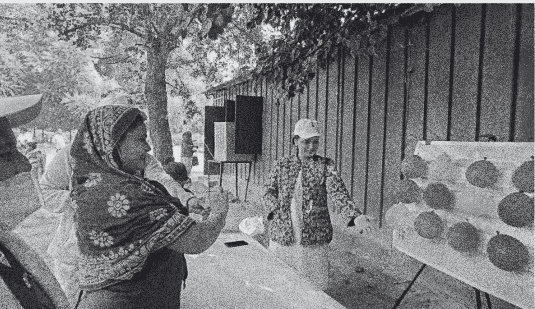
A young woman in her late twenties, already the mother of two, learns, for the first time, that violence, coercion, and abuse are violations of her rights, not burdens she must silently endure. 

She attends a legal awareness session conducted by MAPs lawyers and paralegal volunteers.

She reaches a MAP legal desk or connects through a multilingual digital platform. We help women navigate and access critical support systems: from government schemes and One Stop Centres to health clinics, hospitals, and other protection services.

At the legal desk, MAP's lawyers, psychosocial counsellors, and trained paralegal volunteers provide immediate legal first aid. This includes legal advice, psychosocial support, safety planning, referrals, assistance with filing police complaints, accompaniment where needed

As survivors pursue justice, MAP connects them with pro bono lawyers for court representation. At the same time, MAP uses strategic litigation and systems-focused engagement to strengthen institutional responses to SGBV. 


A young woman in her late twenties, already the mother of two, learns, for the first time, that violence, coercion, and abuse are violations of her rights, not burdens she must silently endure. 

MAP's lawyers and paralegal volunteers conduct community legal awareness sessions that help women recognize their rights, understand the law, and identify the services available to them.

Through MAP's community legal desks, women receive guidance to navigate and access essential support systems. MAP facilitates referrals to government schemes, One Stop Centres, health clinics, hospitals, shelters, and other protection and welfare services, reducing barriers to timely assistance.

A young woman in her late twenties, already the mother of two, learns, for the first time, that violence, coercion, and abuse are violations of her rights, not burdens she must silently endure. 

She attends a legal awareness session conducted by MAPs lawyers and paralegal volunteers.

She then reaches a MAP legal desk.

MAP helps women navigate and access critical support systems: from government schemes and One Stop Centres to health clinics, hospitals, and other protection services.

At the legal desk, MAP's lawyers, psychosocial counsellor, and paralegal volunteers provide immediate legal first aid: referrals, psychosocial support, and assistance with police and medical examinations.

As her case moves forward, MAP connects her with pro bono lawyers for court representation. At the same time, MAP uses strategic litigation and systems-focused engagement to strengthen institutional responses to SGBV. 


Visualising Change

Read a comic about one of our interventions

Our Roadmap to Justice

Visualising Change

Read a comic about one of our interventions

Our Roadmap to Justice

Every survivor's journey is unique. This comic follows the story of one of MAP's clients. Names changed to protect identity.

Visualising Change

Read a comic about one of our interventions

Client Story


Every survivor's journey is unique. This comic follows the story of one of MAP's clients. Names changed to protect identity.

Impact

7,500+

women engaged through awareness-building to reduce stigma, through awareness sessions, door-to-door campaigns, and user-friendly awareness material.

82%

rise in reporting across settlements through sustained legal aid, psychosocial support, and first-response services signalling a trend towards early reporting.

83%

of the cases represented in court, secured positive court outcomes, including protection orders, interim maintenance, and favourable mediation settlements.

₹27+ lakhs

or nearly $30,000 secured in maintenance / compensation for financially dependent and economically vulnerable survivors.

7,500+

women engaged through awareness-building to reduce stigma, through awareness sessions, door-to-door campaigns, and user-friendly awareness material.

82%

rise in reporting across settlements through sustained legal aid, psychosocial support, and first-response services signalling a trend towards early reporting.

83%

of the cases represented in court, secured positive court outcomes, including protection orders, interim maintenance, and favourable mediation settlements.

₹27+ lakhs

or nearly $30,000 secured in maintenance / compensation for financially dependent and economically vulnerable survivors.

A Day in the

Life of a…

Paralegal Volunteer

Paralegal Volunteers (PLVs) are grassroots volunteers, often empanelled by the National Legal Services Authority (NALSA) under the Scheme for PLVs (2009) to provide free para legal services to the weaker sections of society.

As first responders in SGBV cases and labour rights issues, they play a crucial role as community-based volunteers, bringing legal and other services to beneficiaries’ doorsteps. Kamla Yadav is one such passionate PLV.

Listen to Kamla's story, and experience a day in her life.

Key Partners